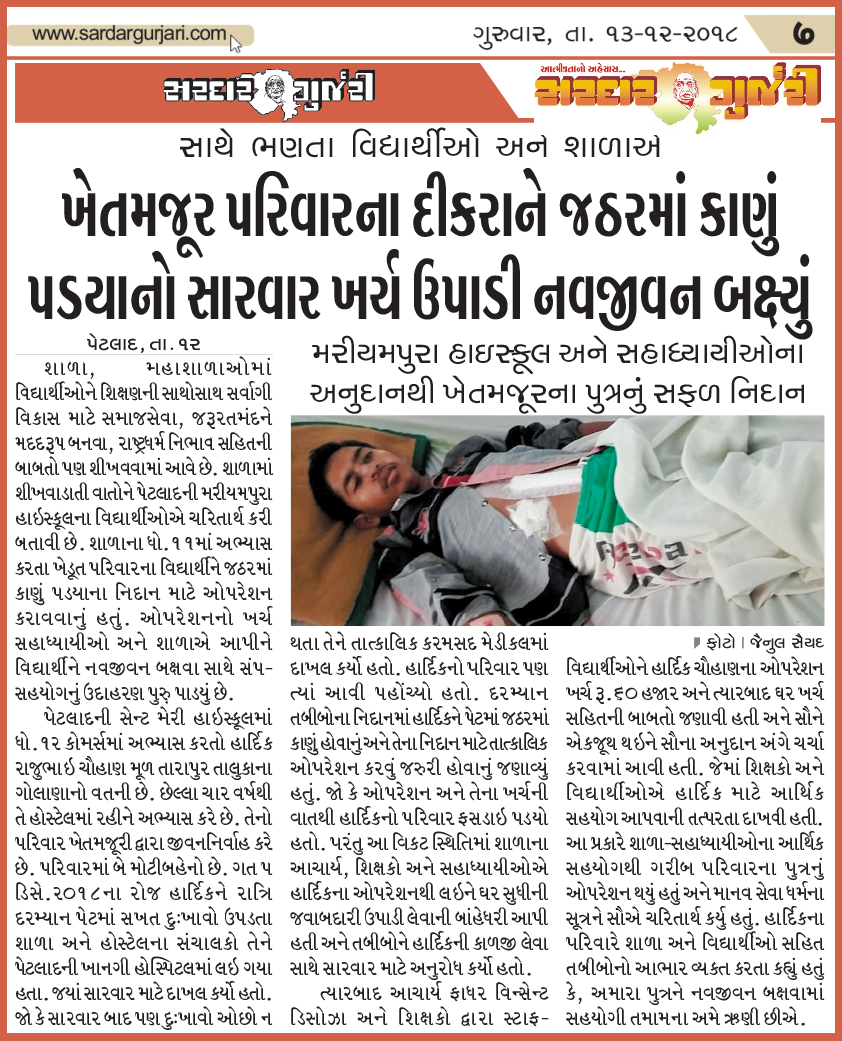
The Humanities Produce Creative Problem Solvers. Please find below one example of humanity by the Principal, staff and students of St. Mary’s High School, Mariampura. I am an ex student of this school during 1969-1972 and very proud of my school.
School and Curriculum or Learning and Humanity?
By Matt Christie
Humanity is our point of living. It is the deepness and richness in our lives that can only be felt, not possessed. Most of us have lost our ability to be honest with ourselves about the loss of our humanity yet we try to fill that void with possessions, power, therapy and gluttony. Humanity is comprised of our sacredness and our freedom. Modern society has disconnected us from both of these. Spirituality is the reality of our existence that we are beautiful beings in a complex web of existence whose beings, while simultaneously are both individual and collective, are together greater than the sum of their parts.
Undeniably the major discourse of schools is not about children or learning but about curriculum and imposing it on to students. The very measure of success in school is: did the student learn the curriculum? Of course when you teach the curriculum you either “win or lose”; however, when you nourish the child and their connection to the community you create a world rooted in respect and love. Perhaps in this sort of world we may finally recognize social and environmental justice.
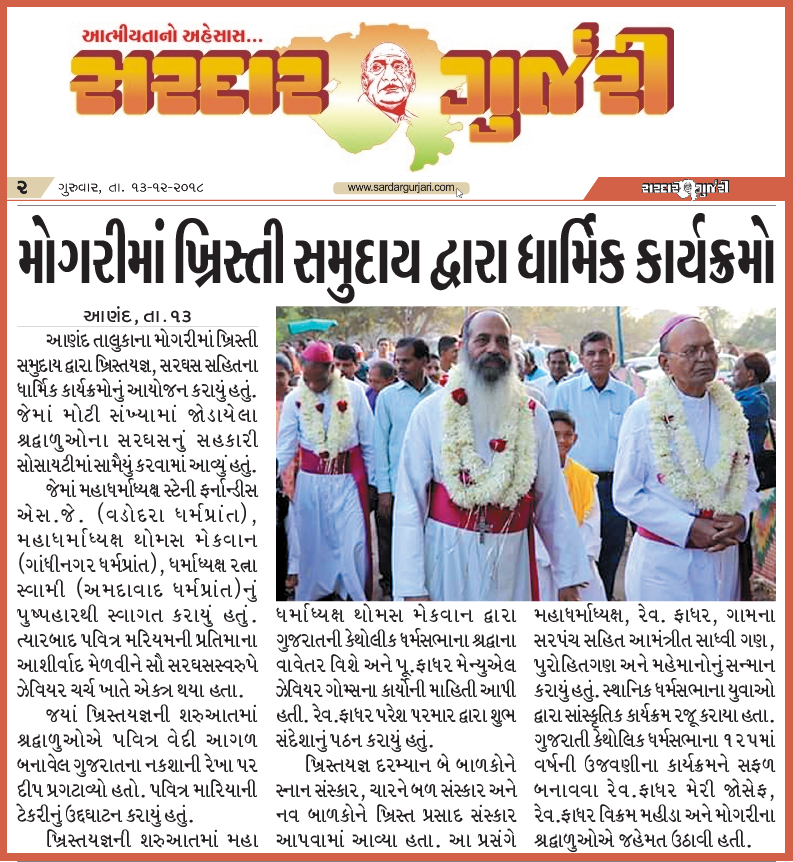
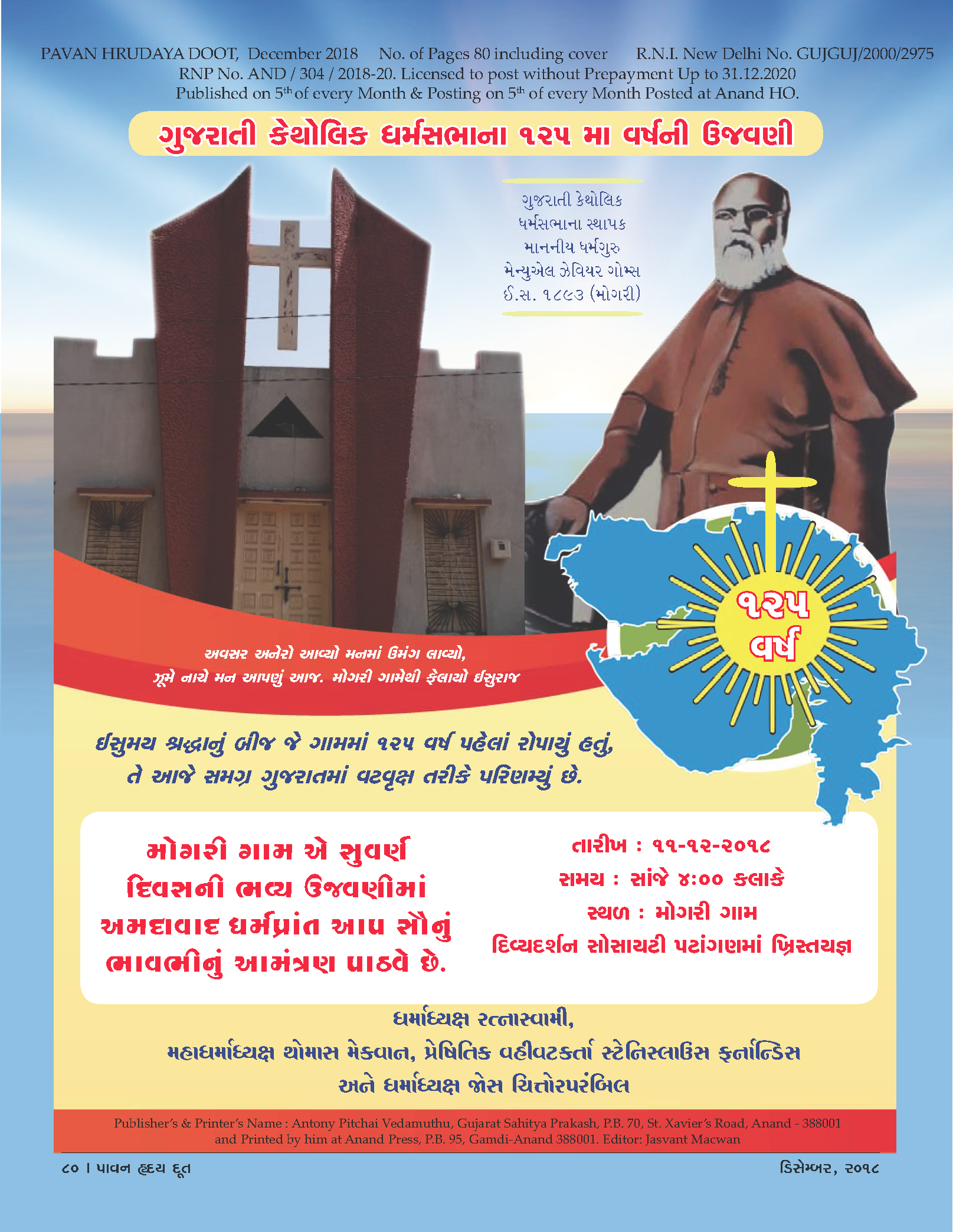
125 years celebration of Gujarati Catholic Congregation in Gujarat.
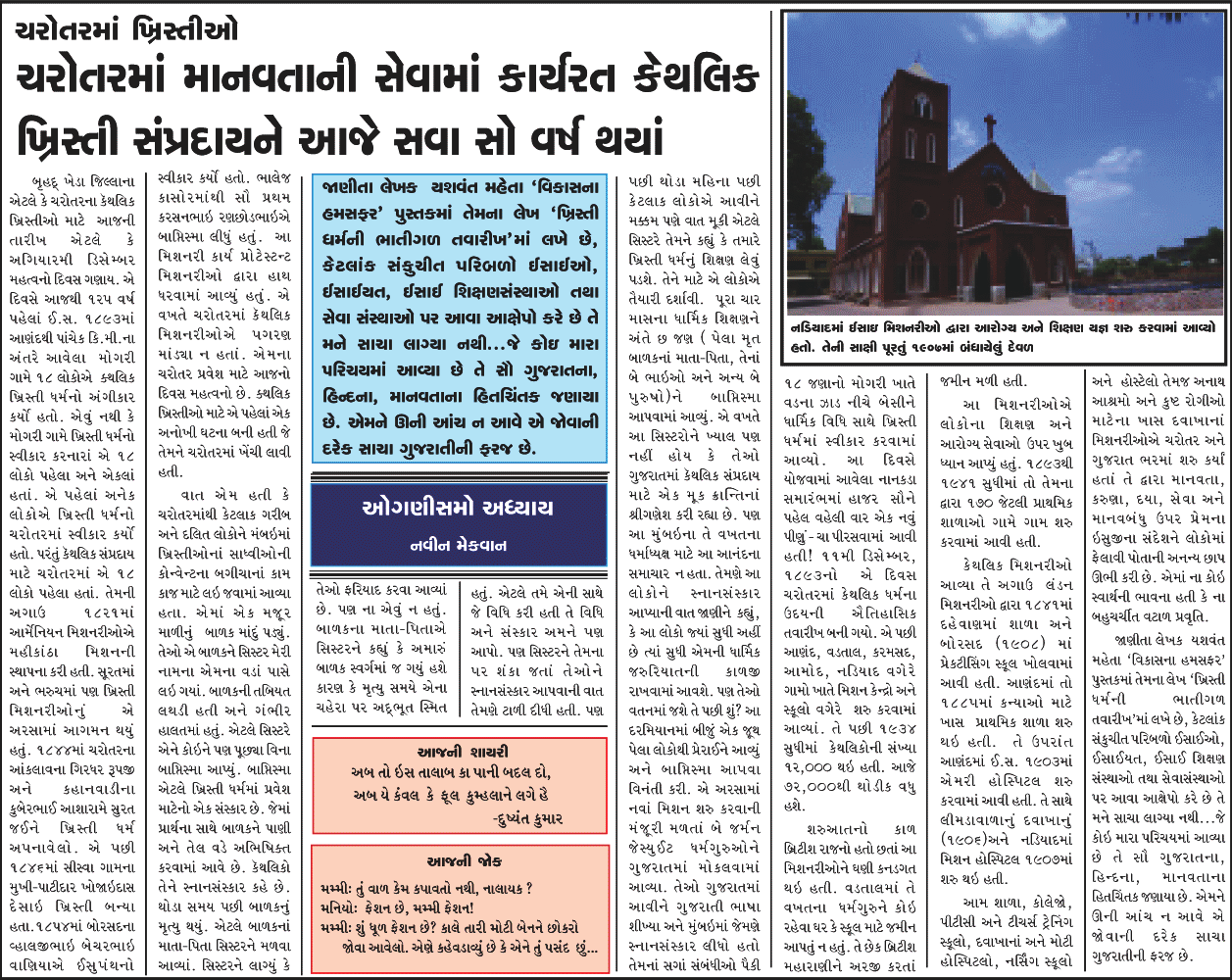
ગુજરાતમાં કેથલિક ધર્મસભાની સૌપ્રથમ સ્થાપના આણંદ પાસેના મોગરી ગામ ખાતે થઈ હતી. જ્યારે ફાધર મેન્યુએલ ઝેવિયર્સ ગોમ્સના હસ્તે મોગરી, નાપાડ અને આસપાસના ૧૮ વ્યક્તિઓને સ્નાનસંસ્કાર આપી કેથલિક ધર્મસભાના પાયાના મંડાણ કર્યાં હતાં. એ દિવસ હતો ડિસેમ્બર ૧૧, ૧૮૯૩. આ વાતને ૧૨૫ વર્ષ પૂરાં થતાં મોગરી સહિત આસપાસના ગ્રામજનો તેમજ અમદાવાદ ધર્મપ્રાંત દ્વારા તેની વિશેષ રીતે ઊજવણી કરાઈ હતી.
ગુજરાતમાં ૧૨૫ વર્ષની કેથલિક ધર્મસભાની ઊજવણી ચાર ભાગમાં કરવાનું અમદાવાદ ધર્મપ્રાંત દ્વારા નક્કી કરાયું. જેમાં પ્રથમ અમદાવાદ એ પછી આણંદ, ઉમરેઠ અને છેલ્લે મોગરી ખાતે તેની ઊજવણી કરાઈ હતી. જેમાં સમુહ પ્રાર્થનાનું આયોજન કરાયું હતું. મોગરીમાં જે જગ્યાએ મોગરી, નાપાડ સહિત આસપાસના ૧૮ વ્યક્તિઓને સ્નાનસંસ્કાર આપ્યા હતા તે જગ્યા પર વર્ષ ૧૯૯૩માં ૧૦૦ વર્ષ પૂરાં થતાં તે જગ્યાએ સેંટ ઝેવિયર્સ ચર્ચ નામે ચર્ચ બનાવવામાં આવ્યું છે. સ્વ. ઈગ્નાશભાઈ મેકવાન તથા ફાધર વિલિયમ પાઉલ દ્વારા જમીનનું દાન કરવામાં આવ્યું હતું. જે ચર્ચ આજે સમગ્ર ઈતિહાસની સાક્ષી પૂરી રહ્યું છે.
૧૨૫ વર્ષની ઊજવણીના ભાગરૂપે મોગરી ગામમાં મંગળવારે સાંજે સમુહ પ્રાર્થના અને ત્યારબાદ ભોજનનું આયોજન કરવામાં આવ્યું હતું. જેમાં ગાંધીનગરના મહાધર્માધ્યક્ષ થોમાસ મેકવાન, અમદાવાદના ધર્માધ્યક્ષ રત્નાસ્વામી, વડોદરા ધર્મપ્રાંતના મહાધર્માધ્યક્ષ બિશપ સ્ટેની ફર્નાન્ડિઝ અને ગુજરાત પ્રાંતના પ્રાંતપતિ ફાધર ફ્રાન્સીસ પરમાર, સહિત અન્ય ફાધર, સીસ્ટર્સ સહિત અન્ય ભક્તજનો હાજર રહ્યા હતા.
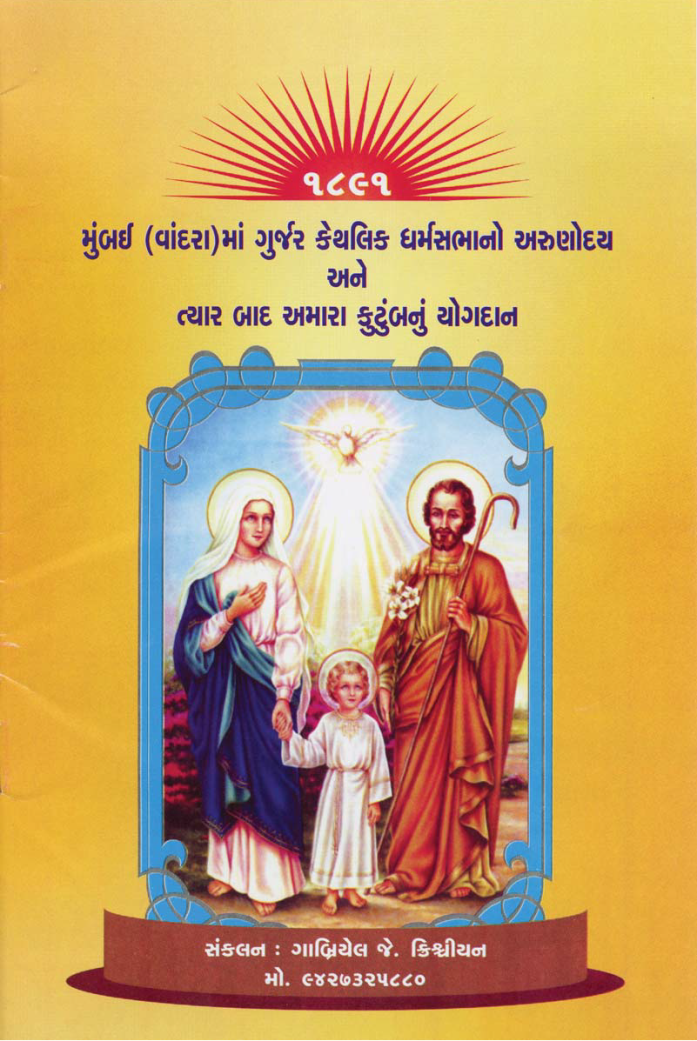
પણ ઈતિહાસ પર નજર નાખીએ તો ખરેખર તો ગુજરાતી કેથલિક ધર્મસભાની શરુઆત તો સપ્ટેમ્બર ૯, ૧૮૯૧માં (મરિયમ જયંતી) મુબઈ ખાતે થઈ હતી. જ્યારે ગુજરાતમાંથી રોજીરોટી મેળવવા આવેલા ૮ વ્યક્તિઓ જેમને કામે રાખનારા સિસ્ટરોની સહાયથી તેઓએ ધાર્મિક શિક્ષણ મેળવ્યું અને વાંદરાના સંત પીતર દેવળમાં સ્નાનસંસ્કાર મેળવી કેથલિક ધર્મસભામાં પ્રવેશા મેળવ્યો. જેમાં નાપાડના ૨ જણ અને મોગરીના ૬ જણ હતાં.
થોડા સમય પછી નાપાડના બે જણમાંથી એક શ્રી. ફ્રાન્સિસ ઝાવિયેર (ભગા ટીસા) નાપાડ પરત આવ્યા ૧૮૯૩માં ગુજરાતના કેથલિક લોકોની સારસંભાળ માટે મુંબઈના ધર્માધ્યક્ષે ફાધર મેન્યુઅલ ગોમ્સને ગુજરાત મોકલી આપ્યા. જેઓ વડોદ સ્ટેશન પર ઉતરી પગપાળા નાપાડ પહોંચ્યા જ્યાં એમના સફેદ જભ્ભાને લીધે શ્રી. ફ્રાન્સિસભાઈએ એમને ઓળખી લીધા અને તેમનું સ્વાગત કર્યું. એ સમયે નાપાડમાં મુક્તિફોજનુ વર્ચસ્વ હોવાથી ફાધરે મોગરી જવાનું નક્કી કર્યું જે જોગનુવસાત શ્રી. ફ્રાન્સિસભાઈની સાસરી હતી. આ રીતે મોગરીને ફાધરે પોતાનું કેંદ્ર બનાવી દીધું અને પછી તો ગુજરાત કેથલિક ધર્મસભા સમગ્ર ગુજરાતમાં કેલાઈ ગઈ.
વિશેષ માહિતી માટે નીચેની પિક્ચર પર ક્લિક કરી શ્રી. ગાબ્રિયેલ ક્રિશ્ચિયન દ્વારા પ્રકાશિત પુસ્તિકા વાંચો.
‘Jesus’ face’ uncovered at ancient church in the Israeli desert
By James Rogers Published November 13, 2018
A previously unknown 1,500-year-old painting of Christ’s face has been uncovered at a Byzantine church in Israel’s Negev desert.
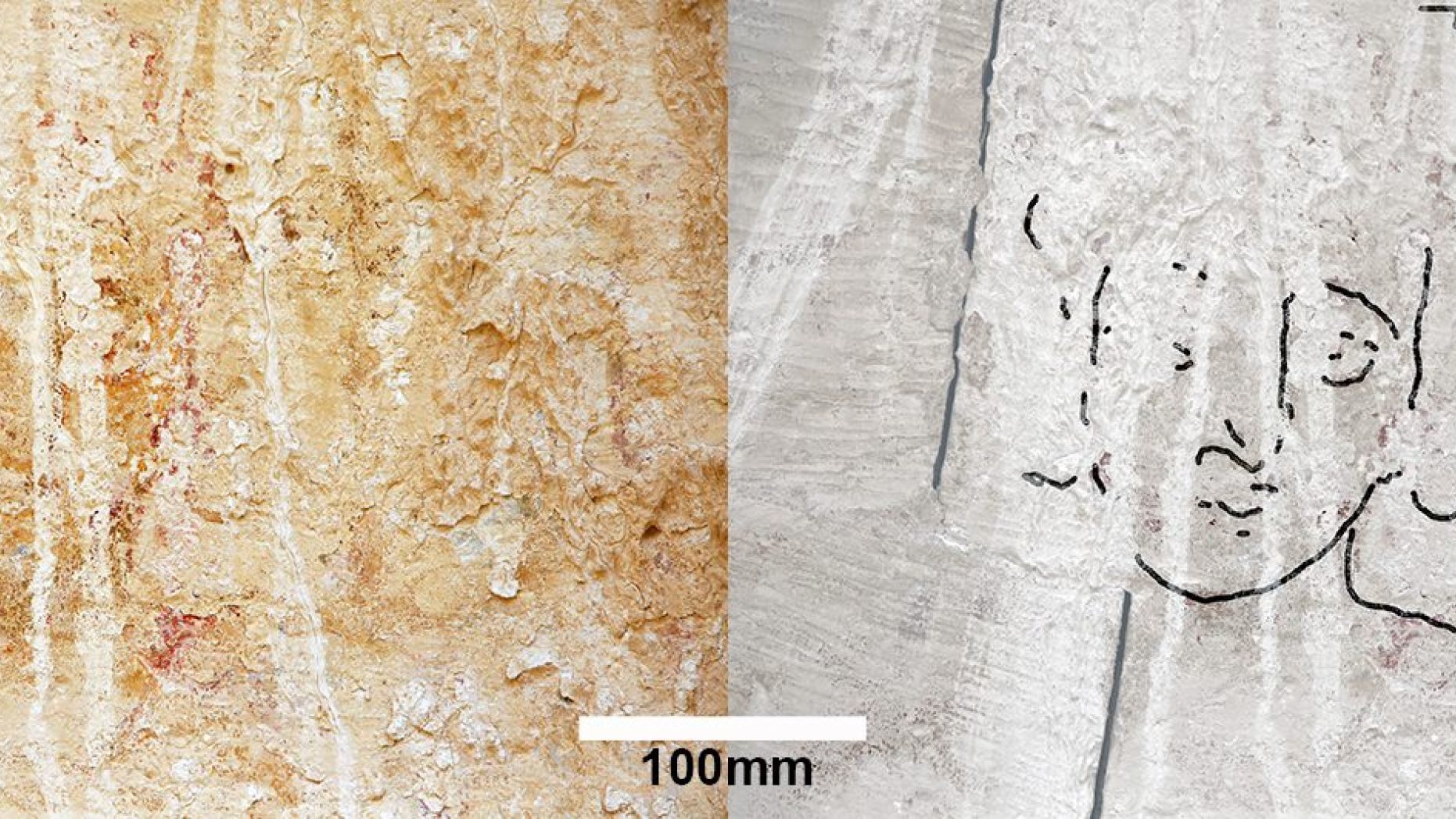
The discovery in the ancient Byzantine village of Shivta has thrilled archaeologists. Although the painting is fragmented, experts from Israel’s University of Haifa were able to make out the facial outline. Their research was published recently in the journal Antiquity.
The painting, which is believed to date from the sixth century, depicts Jesus as a short-haired youth.
“Christ’s face in this painting is an important discovery in itself,” they explained in their paper. “It belongs to the iconographic scheme of a short-haired Christ, which was especially widespread in Egypt and Syro-Palestine, but gone from later Byzantine art.”
The face of Christ with proposed reconstruction. (Photograph by Dror Maayan/Antiquity)
The painting was briefly noted in the 1920s, but has now undergone more analysis. In their study, the University of Haifa archaeologists explain that Christ is depicted next to a much larger figure, which is probably John the Baptist. “The location of the scene – above the [church’s] crucifix-shaped Baptist font – suggests its identification as the baptism of Christ,” said the study’s authors.
Experts describe the painting’s discovery as extremely important, noting that it predates the religious iconography used in the Orthodox Christian Church. “Thus far, it is the only in situ baptism-of-Christ scene to date confidently to the pre-iconoclastic Holy Land,” they said in the study. “Therefore, it can illuminate Byzantine Shivta’s Christian community and Early Christian art across the region.”
The painting is the latest fascinating archaeological discovery in Israel. Engravings of ships, for example, were recently found on an ancient water cistern discovered in a city in the Negev desert.
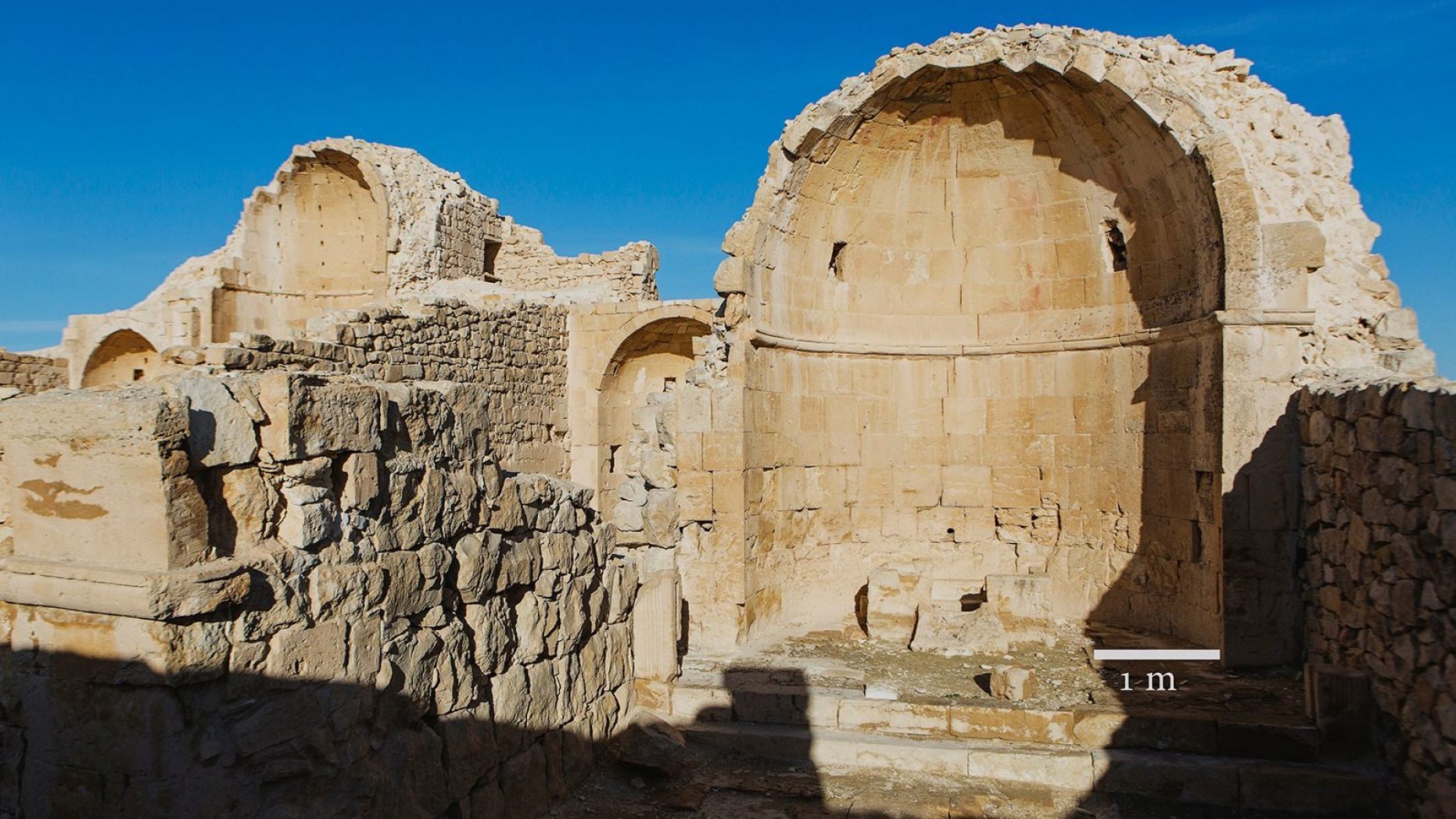
The Baptistry Chamber (on right) where the painting was found. (Photograph by Dror Maayan/Antiquity)
In a separate project, archaeologists recently confirmed the first full spelling of “Jerusalem” on an ancient stone inscription excavated in the area of Jerusalem’s International Convention Center, known as Binyanei Ha’Uma.
In another project, experts discovered a site that may offer fresh insight into the ancient biblical kingdom of David and Solomon. In a separate archaeological dig, a trove of bronze coins, the last remnants of an ancient Jewish revolt against the Roman Empire, were recently discovered near the Temple Mount in Jerusalem.
In February, archaeologists announced the discovery of a clay seal mark that may bear the signature of the biblical Prophet Isaiah.
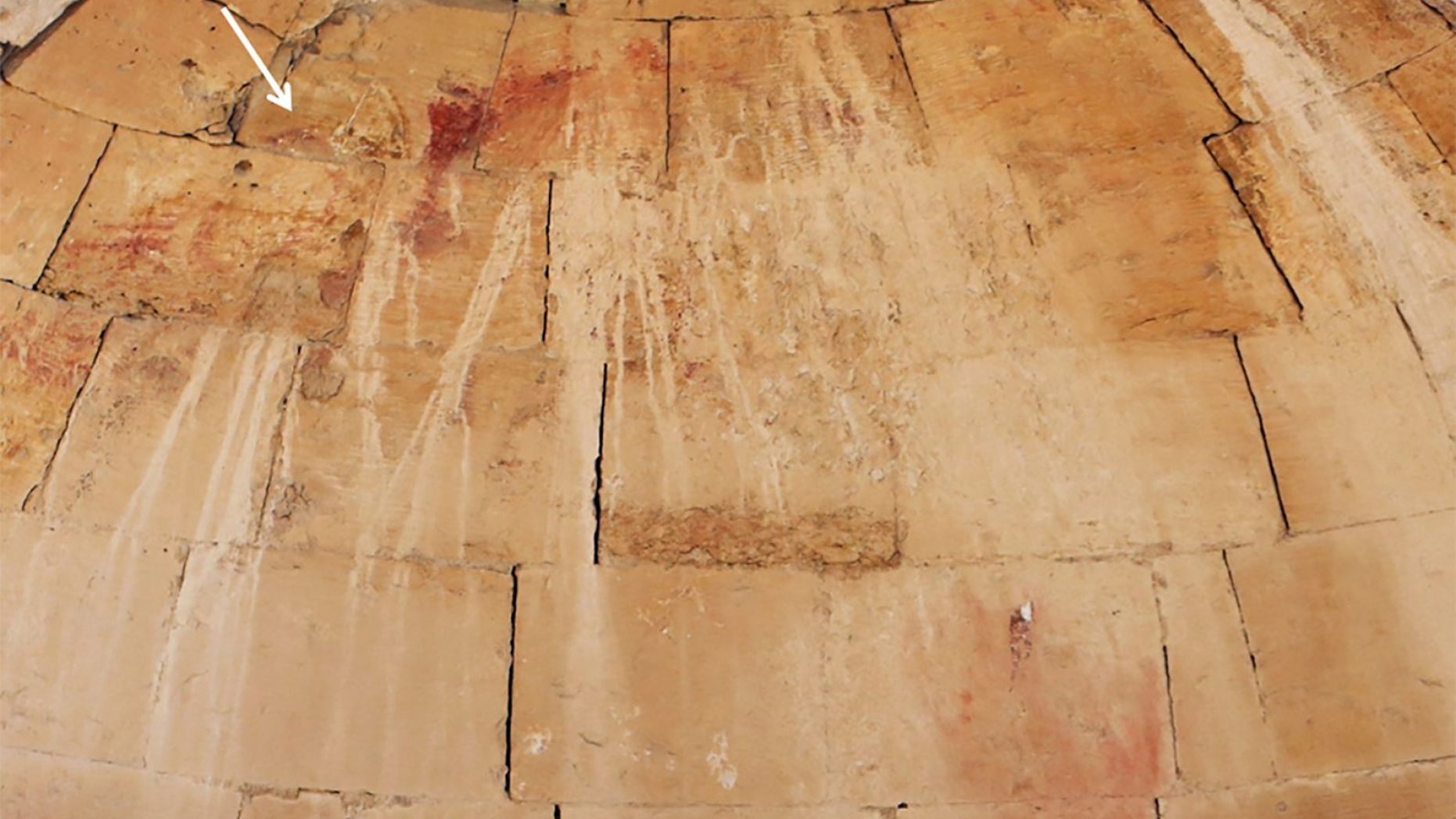
Remnants of the baptism-of-Christ scene (indicated by white arrow) on the apse of the Baptistry chamber. (Photograph by Dror Maayan/Antiquity)
Other recent finds include the skeleton of a pregnant woman, dating back 3,200 years, in Israel’s Timna Valley, at a place once called King Solomon’s Mines.
At the site of an ancient city on the West Bank, archaeologists are also hunting for evidence of the tabernacle that once housed the Ark of the Covenant.
Some experts also believe they have found the lost Roman city of Julias, formerly the village of Bethsaida, which was the home of Jesus’ apostles Peter, Andrew and Philip.
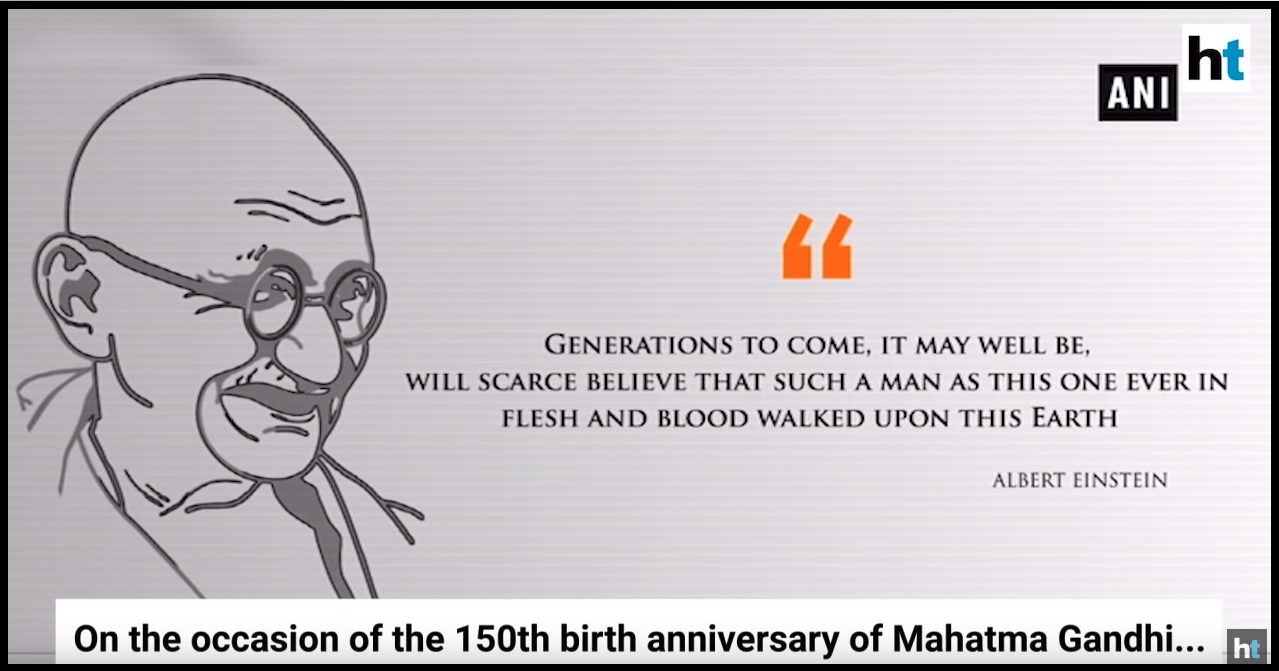
On the occasion of the 150th birth anniversary of Mahatma Gandhi, artists from over 124 countries have contributed in paying homage to the Father of the Nation through his favorite bhajan ‘Vaishnav Jan To Tene Kahiye’. The famous Gujarati hymn was penned by the 15th century poet Narsimha Mehta and was one of the favorite bhajans of Gandhi, who included it into the roster of prayers routinely sung before his meetings.
During the closing ceremony of the Mahatma Gandhi International Sanitation Conference (MGISC) and in the presence of the Secretary-General of the United Nations Antonio Gutierrez, Prime Minister Narendra Modi, External Affairs Minister Sushma Swaraj and Minister of Drinking Water and Sanitation Uma Bharti, launched a medley version of the bhajan, sung by artists from over 124 countries.
All Indian Missions abroad identified local artist groups to record the bhajan who gave rise to an eclectic, colorful and rich rendition of the hymn infused with the local flavor of the region. Videos from different regions of the world have also been put together in a fusion video of about five minutes to give flavor to the bhajan. Amongst the star performers is President of Nauru Baron Divavesi Waqa. Waqa’s gesture was not just a tribute to Gandhi but was also a personal gift from him to Prime Minister Modi. The medley version and individual country contributions are available on the External Affairs Ministry’s YouTube page.
ગાંધીજીના પ્રિય ભજન ‘વૈષ્ણવજન તો તેને રે કહીએ’ને વિશ્વના ૧૨૪ દેશના કલાકારોએ સંગીત આપીને અનોખી શ્રદ્ધાંજલિ આપી હતી. ગાંધીજીની ૧૪૯મી જન્મજયંતિ નિમિત્તે નવી દિલ્હીમાં આયોજિત મહાત્મા ગાંધી ઈન્ટરનેશનલ સેનિટેશન કોન્ફરન્સના સમાપન વખતે આ અનોખું ભજન રજૂ કરવામાં આવ્યું હતું. વડાપ્રધાન નરેન્દ્ર મોદી દ્વારા આ ભજનની નવી સંગીતમય આવૃત્તિ લોન્ચ કરાવાઈ હતી.
વિદેશ મંત્રાલયે સત્તાવાર યાદીમાં જણાવ્યું હતું કે, આ પ્રસંગે યુએનના સેક્રેટરી જનરલ એન્ટોનિયો ગુટરેસ, વિદેશ મંત્રી સુષમા સ્વરાજ, વૉટર એન્ડ સેનિટેશન મંત્રી ઉમા ભારતી અને અન્ય મંત્રીઓ, અધિકારીઓ પણ હાજર રહ્યા હતા. વિદેશી પ્રતિનિધિમંડળ સહિત તમામ નેતાઓએ ‘વૈષ્ણવજન’ની આ નવી આવૃત્તિના વખાણ કર્યા હતા.
ગાંધીજીના કારણે વિશ્વ વિખ્યાત થયેલું આ ગુજરાતી ભજન ૧૫મી સદીમાં કવિ નરસિંહ મહેતા દ્વારા લખવામાં આવ્યું હતું. ગાંધીજીએ આશ્રમજીવનનની શરૃઆત કરી ત્યારે સવારની પ્રાર્થનામાં આ ભજનનો સમાવેશ કર્યો હતો. ભારતીય પ્રતિનિધિઓ દ્વારા વિદેશી સંગીતકારોને આ ભજનની માહિતી અપાઈ હતી. બાદમાં તેમણે સ્થાનિક સંગીતકારો સાથે તેને સંગીત આપ્યું હતું.
વિદેશ મંત્રાલયે જણાવ્યું હતું કે, આ ભજનને અંગોલા, આર્મેનિયા, શ્રીલંકા, સર્બિયા, ઈરાક અને આઈલેન્ડના અગ્રણી સંગીતકારોએ સંગીત આપ્યું હતું. આ દરમિયાન વિશ્વભરના કલાકારોની કલા ખીલી ઊઠી હતી. આ પ્રસંગના અમે પાંચેક મિનિટના બે વીડિયો પણ જાહેર કર્યા છે. અમારી ઈચ્છા હતી કે, આ ભજનને યુએનમાં નોંધાયેલા તમામ દેશોના સંગીતકારોનું સંગીત અપાય.



 By James Rogers Published November 13, 2018